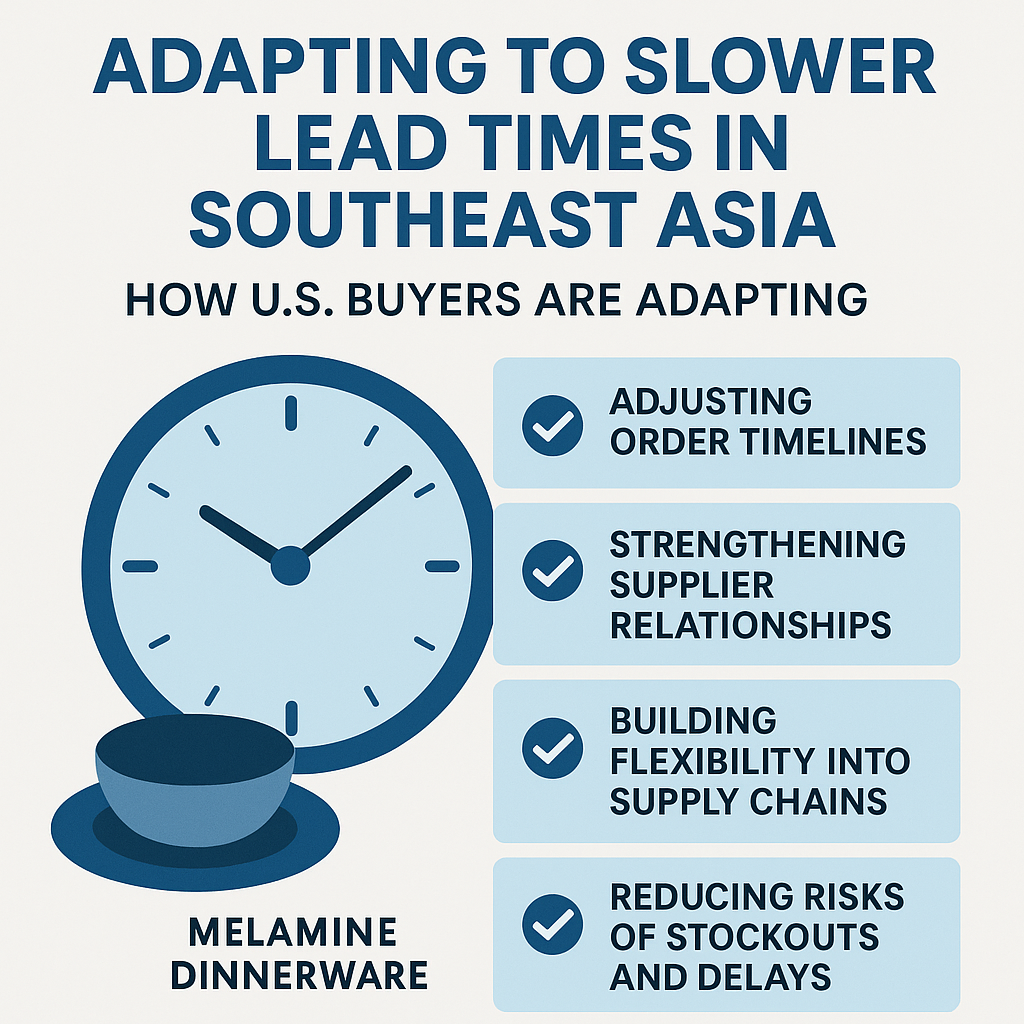
How US Buyers Adapt to Slower Lead Times in Southeast Asia: The Production Scheduling Challenge for Melamine Dinnerware
As more US buyers shift their sourcing of melamine dinnerware from China to Southeast Asia, they face new realities in production scheduling. Many purchasers have become accustomed to China's fast-paced, flexible manufacturing, often pushing for shorter lead times by compressing production schedules. This approach, however, meets resistance in Southeast Asia, where the manufacturing culture is different—particularly in labor practices and overtime.
1. Labor-Intensive Production and Overtime Culture
The melamine tableware factory model in Southeast Asia often remains labor-intensive, but local workers are less likely to accept frequent overtime or sudden schedule changes compared to their Chinese counterparts. For buyers of melamine dinnerware and melamine dinnerware factory products, this means longer and less predictable production times.
2. Adjusting to Fixed Working Hours
In countries like Vietnam, Indonesia, and Thailand, strict labor laws and a stronger emphasis on work-life balance mean factories adhere to set working hours. As a result, melamine tableware factory owners cannot simply add extra shifts to accelerate orders. US buyers need to realign their planning, especially when ordering custom melamine dinnerware.
3. Production Bottlenecks and Lead Time Extension
Without the ability to rapidly scale up labor, production bottlenecks become more frequent, particularly during periods of high demand. Lead times for melamine dinnerware, melamine tableware, and related factory products may increase by weeks, affecting retailers and wholesalers who depend on tight schedules.
4. The Need for Improved Forecasting
US importers of melamine dinnerware must develop more precise demand forecasts and communicate their needs much earlier. The traditional “last-minute” approach, successful in China, now risks missed deadlines and out-of-stock situations with Southeast Asian melamine tableware factory partners.
5. Collaborative Problem-Solving
Some buyers have responded by building closer relationships with their Southeast Asian suppliers. By sharing sales data and production forecasts, they help melamine dinnerware factory teams plan resources in advance, reducing surprises and ensuring smoother delivery.
SEO Keywords
melamine dinnerware, melamine dinnerware factory, melamine tableware, melamine tableware factory, custom melamine dinnerware, wholesale melamine dinnerware